Bain’s Cape Mountain Whisky
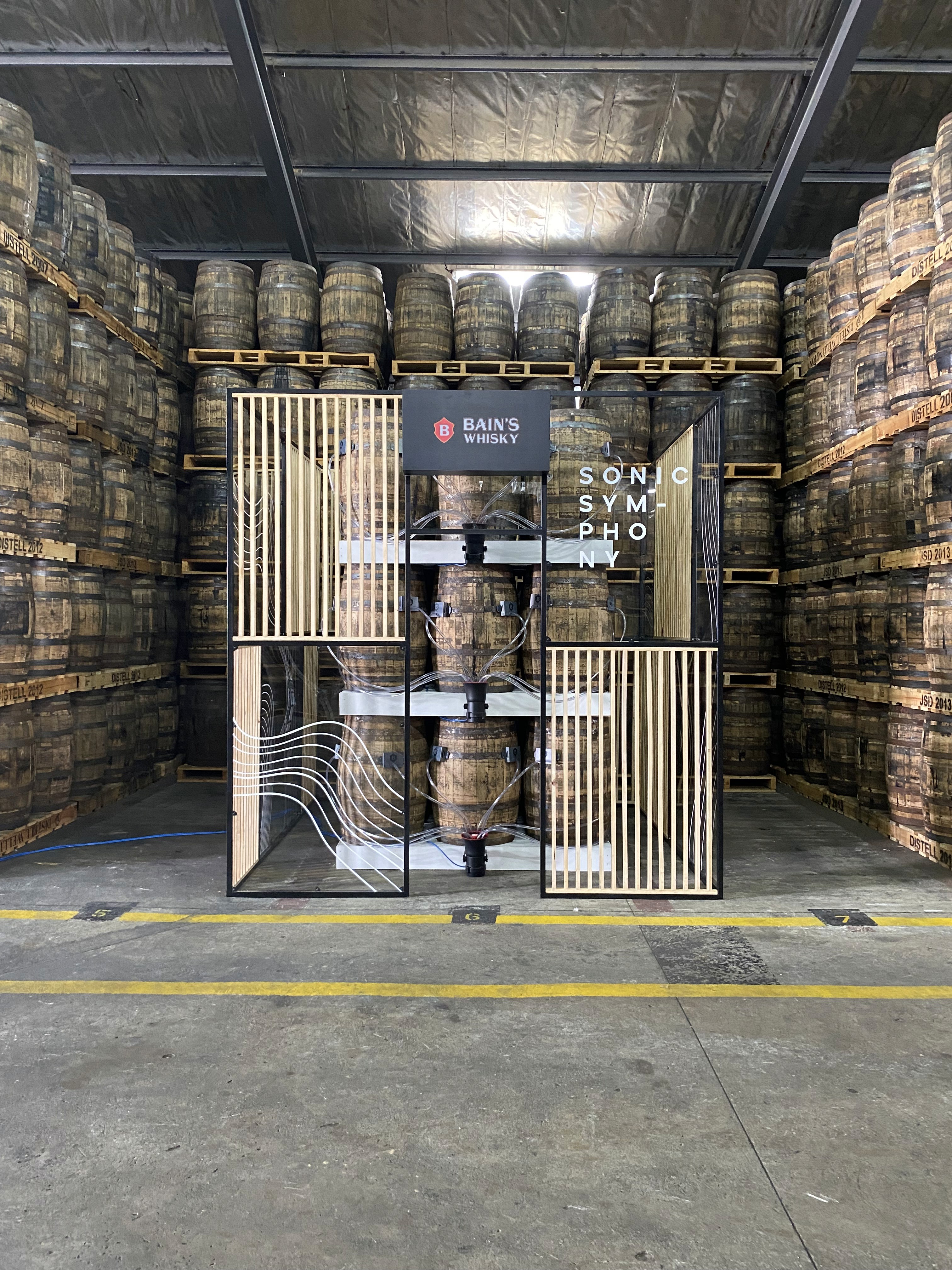
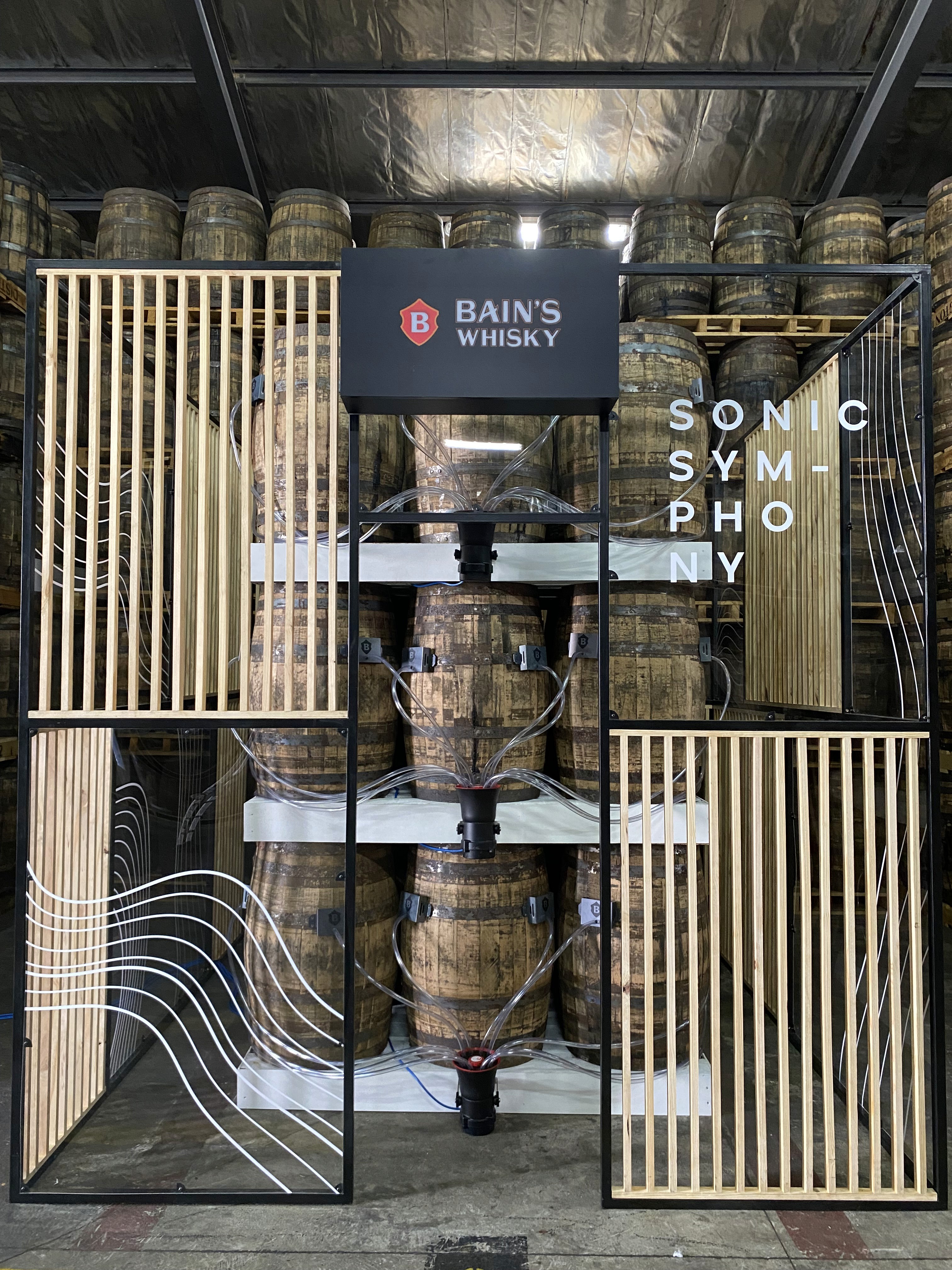
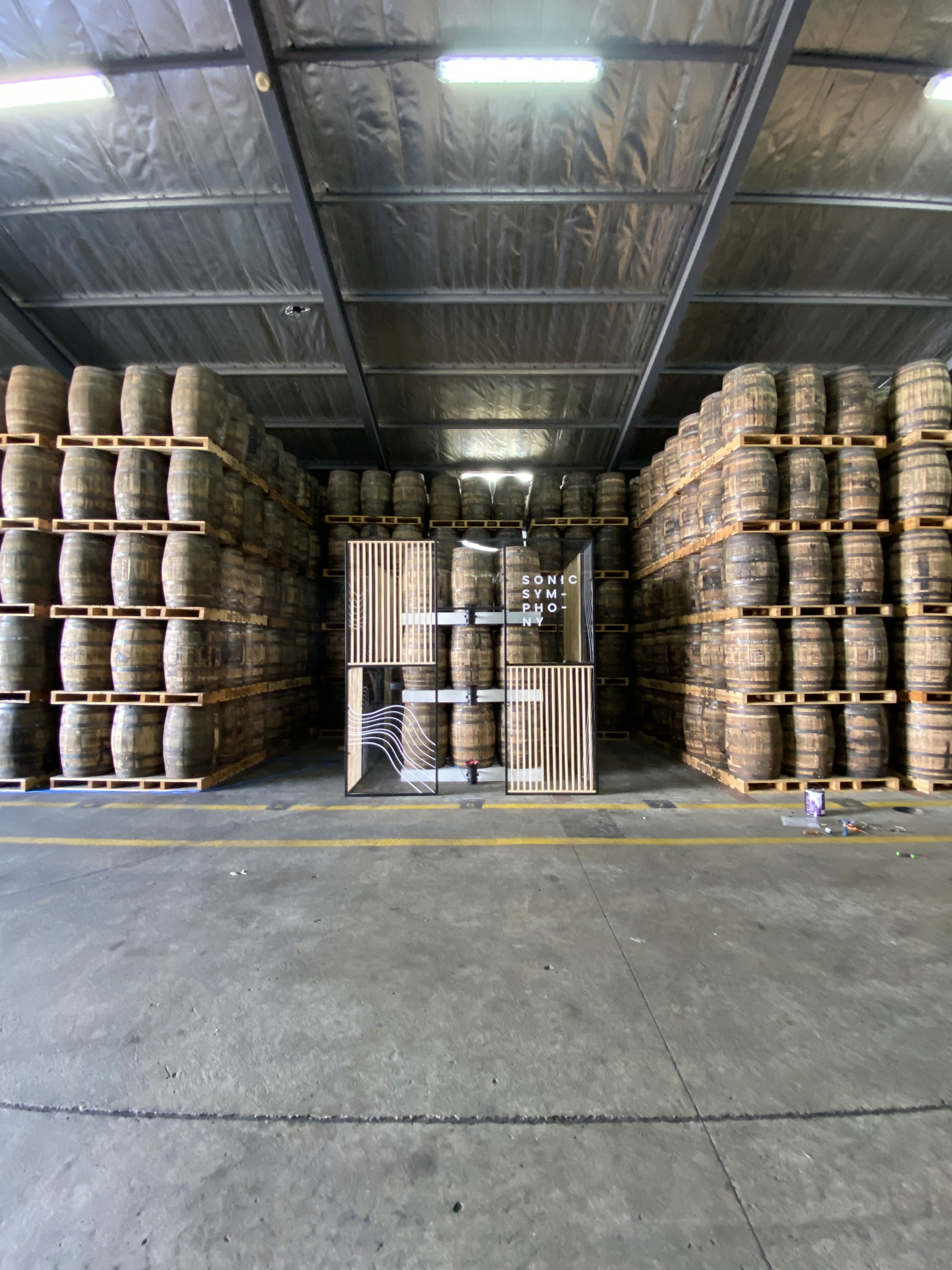
For Sonic Symphony, Bain’s and Hoorah set out to explore what would happen if whisky could be matured with sound. Thingking was brought in to work out how that idea could physically happen inside a working distillery. That meant developing a system that could transfer vibration into the whisky, designing the equipment around it and building the cellar installation that housed the experiment. The result combined barrels, transducers, lighting, fog, a live camera feed and a rotating barrel that turned the music into a visible waveform.
The concept depended on the music doing more than playing in the room. It needed to create vibration inside the barrels and move the liquid against the wood. The installation also had to run for an extended period inside the distillery, with minimal intervention. Everything from the electronics and barrel mounts to ventilation, lighting and materials had to work within the site’s safety requirements. Because the project would be watched through a live feed, the installation also needed to hold up on camera throughout the process.
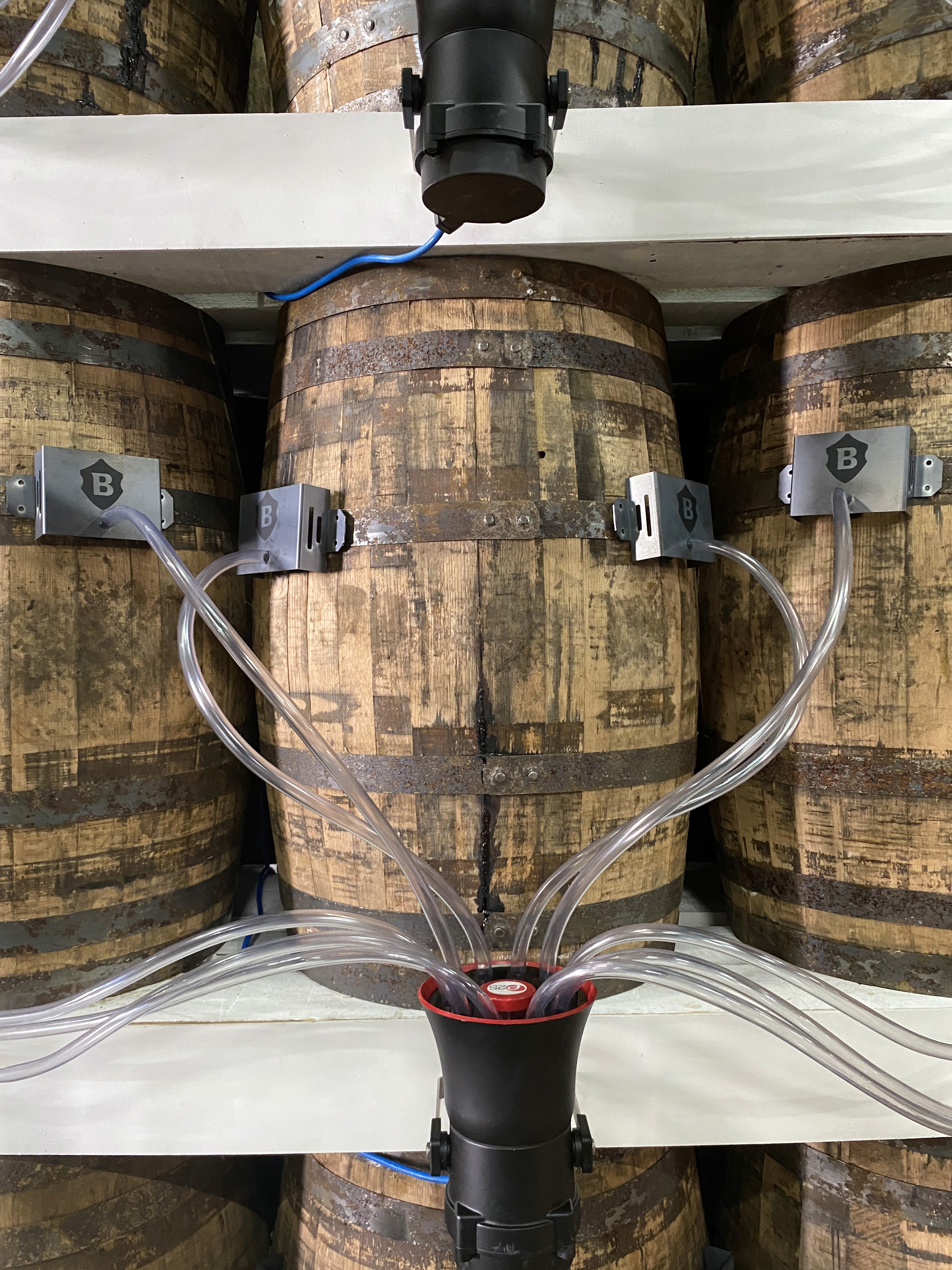
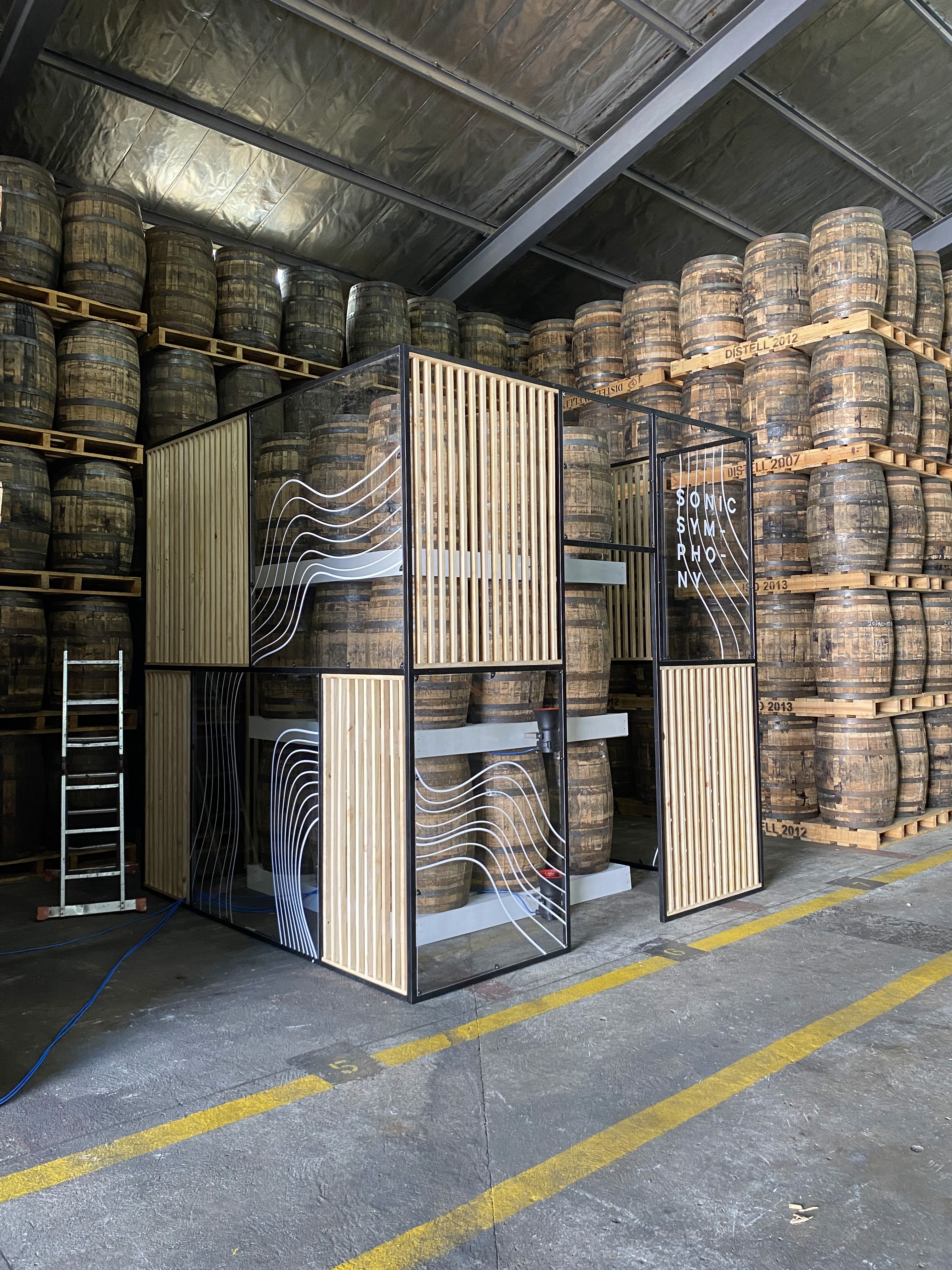
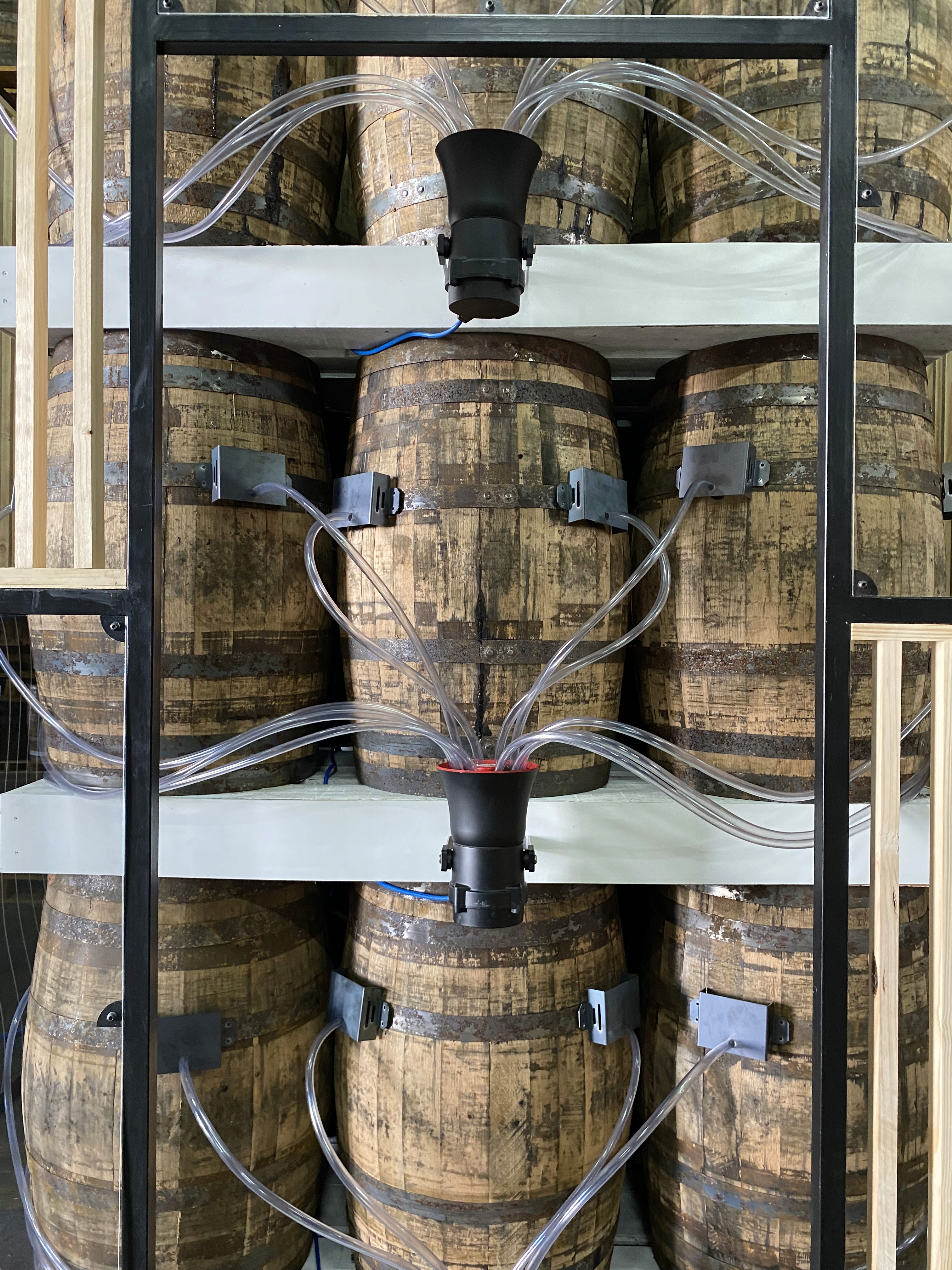
Thingking developed a system using transducers mounted directly to the barrels on custom brackets. Instead of relying on speakers in the room, vibration was transferred into the barrels themselves. A separate rotating barrel was built to make the sound visible. Its surface was treated with UV paint while LEDs traced the waveform as the barrel turned, creating an image that appeared and disappeared with each rotation. The barrels sat inside a black steel structure clad in acrylic, with neon-flex running along the frame. The structure was kept open at the top and slatted at the sides to allow the fog, electronics and lighting equipment to operate safely. DMX-controlled lighting ran between the casks, while atomisers introduced a layer of falling fog. A camera inside the cellar supplied the live feed. Several details changed during development as the installation moved from concept to build. Glass was replaced with acrylic, the enclosure was opened up for ventilation, and new fixing details were developed for the cladding.